
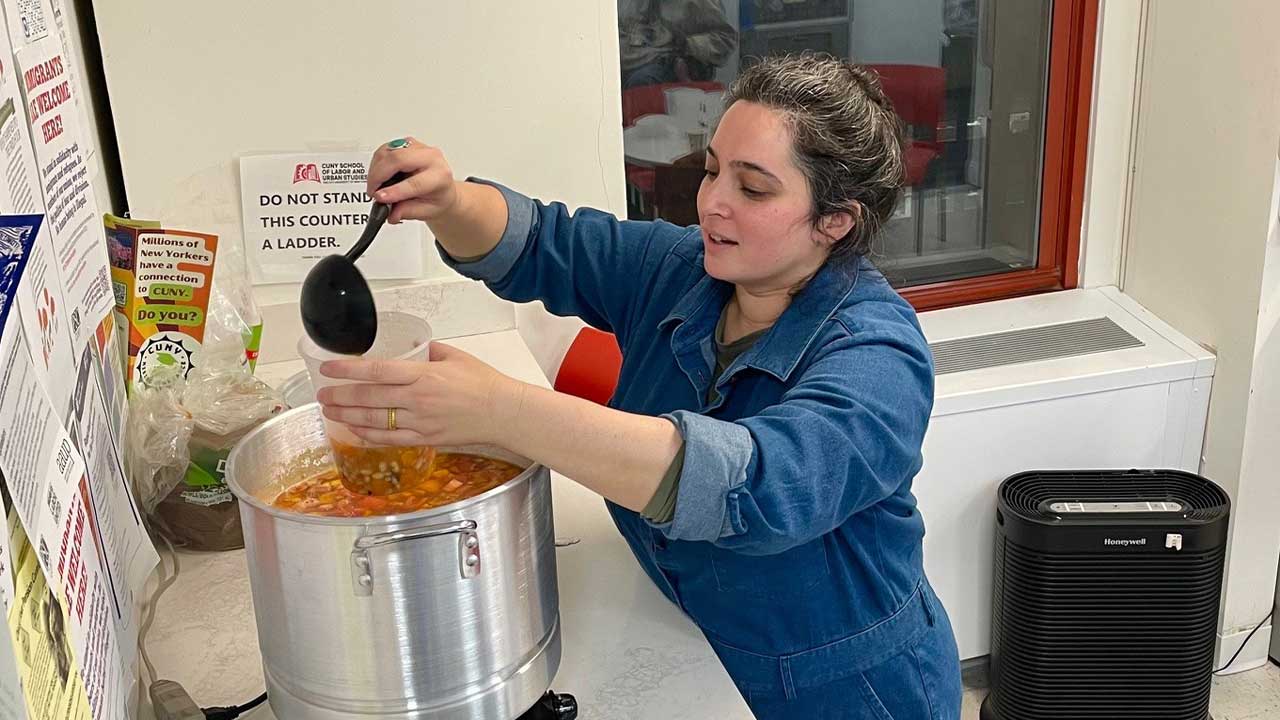
Here at SLU, food insecurity isn’t just about hunger – it’s about stigma, survival, and the kind of community we choose to build. For many students, the challenge of accessing food is not only financial, but social – shaped by whether they feel safe, seen, and supported enough to ask for help. Now, a new group of students is rethinking what food access can look like at SLU.
I personally became acutely aware of the reality of food insecurity at SLU when I became a co-chair of the Student Union. One of our primary responsibilities is managing the Student Activity Fees portion of the school’s budget. That’s where I learned that nearly half of those funds were being directed toward food insecurity initiatives – providing snacks and coffee before class, maintaining a Community Cupboard food pantry, and distributing $100 emergency grants for groceries.
To me, this was more than a budget detail. It was evidence of a larger, unmet need – one that demanded both deeper investigation and better solutions.
Since SLU’s founding in 2018, food insecurity has been a persistent reality for a significant portion of the student body. In 2019, research by a Fieldwork class found that one in four students experienced food insecurity. Students reported dissatisfaction with existing food options and overwhelmingly agreed that reliable access to healthy food would improve their academic success.
But the students didn’t stop at identifying the problem – they proposed a solution.
Their report outlined a vision for a student-led, cooperatively structured food program grounded in the principles of democratic ownership and mutual aid. Rather than relying on traditional food pantry models, which can carry stigma and limit access, the proposal imagined a system where students collectively participate in sourcing and distributing food. By partnering with local restaurants to redistribute surplus prepared meals and organizing shared labor among students, the model aimed to ensure that food access was universal, dignified, and community driven.
This approach reflects the core principles of mutual aid: people coming together to meet each other’s needs through solidarity, not charity, and recognizing that food insecurity is not an individual failure, but a collective condition shaped by broader economic and social systems.
While the original project was paused during the COVID-19 pandemic, the need it identified has only grown more urgent.
In Fall 2025, members of the Student Union and Solidarity Economy Club revisited the original research to better understand the current state of food insecurity at SLU. The findings point to a deepening crisis.
At the center of these findings is a persistent barrier: stigma.
More than half of surveyed students indicated that they would hesitate to access food resources due to fear of judgment or being “outed” as in need. As one student shared:
“The stigma. The embarrassment of not wanting people to know you have a need. Not knowing if people will have space for that. Not knowing if it would be weaponized or used against you in some way.”
This stigma has real consequences. Even when resources exist, many students do not feel able to use them. Traditional approaches to food security – such as pantries or emergency aid – are important, but they often operate in ways that individualize need and unintentionally reinforce shame.
A cooperative mutual aid approach offers a different path.
By designing systems where everyone participates – whether by contributing time, sharing resources, or simply showing up – mutual aid reduces the visibility of “need” as something that separates people. Instead, it builds a culture where care is normalized and collective responsibility is practiced.
At SLU, students are now working to reimagine what this could look like in real life. Building on the original proposal, we are exploring partnerships with local food providers, developing cooperative governance structures, and designing models of shared labor that make participation accessible to all.
This is about more than food. It is about creating a campus where care is not conditional, where resources are shared, and where students are not left to navigate hardship alone.
The question moving forward is not simply how to provide food, but how to build systems of care that reflect the values of the SLU community: dignity, democracy, and mutual aid. This work is just beginning – and it depends on all of us.
Students, faculty, and staff are invited to be part of reimagining food access at SLU. Whether you have five minutes or want to take on a larger role, there are many ways to contribute. The Student Union and Solidarity Economy Club are collaborating with Dean Mantsios to move this project forward. Attend a meeting, share your ideas, and help shape what this becomes!
This is an opportunity to build something different at SLU: a model of food access rooted not in charity, but in solidarity – a system where everyone participates, and everyone belongs.
If you’re interested in getting involved, reach out to the Student Union (studentunion@slu3.cuny.edu) or Solidarity Economy Club (solidarityeconomyclub@gmail.com) to learn more.